Congress Passes Key Funding Bills Following Brief Government Shutdown
02/17/2026
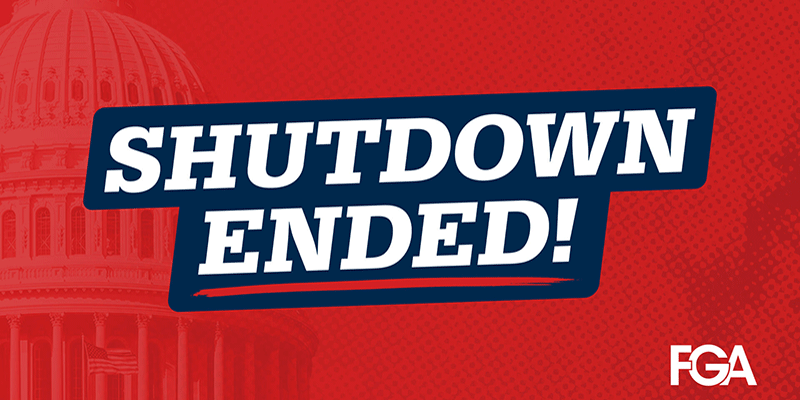
After a partial federal government shutdown that lasted from January 31 through February 3, 2026, Congress has passed five of the six remaining federal funding bills for Fiscal Year 2026. As a result, the U.S. Departments of Education and Labor are now funded and operational through September 30, 2026, the end of the federal fiscal year.
Under the negotiated legislation, Senate and House appropriators agreed to allocate $78.79 billion in discretionary funding to the Department of Education and $13.46 billion to the Department of Labor. This represents a 1 percent decrease for the Department of Education and a 7.8 percent decrease for the Department of Labor compared to the previous fiscal year.
The Labor, Health, and Human Services (LHHS) Appropriations Bill includes a mix of targeted increases and level funding across programs that directly impact community college students. Funding increases were secured for Strengthening Tribally Controlled Colleges and Universities (TCCUs), Strengthening Alaska Native and Native Hawaiian-Serving Institutions (ANNHIs), Strengthening Historically Black Colleges and Universities (HBCUs), Developing Hispanic-Serving Institutions (HSIs), and Head Start to name a few.
Additionally, several student aid and support programs received level funding. These include the maximum Pell Grant award, Federal Work-Study (FWS), Supplemental Educational Opportunity Grant (SEOG), TRIO, GEAR UP, Child Care Access Means Parents in School (CCAMPIS), the Postsecondary Student Success Grant (PSSG), Basic Needs programs, Career and Technical Education (CTE) State Grants, Adult Education State Grants, and Apprenticeships.
While maintaining level funding for the maximum Pell Grant prevents immediate cuts, many institutions continue to advocate for at least a $200 increase to help students manage rising living expenses and inflation. For many community college students, Pell Grants remain a cornerstone of affordability.
Unfortunately, not all programs fared as well. The LHHS bill reduces funding for the Strengthening Institutions Program (SIP) by $10 million. SIP is a federal grant program designed to support colleges that serve high numbers of low-income and first-generation students and that operate with below-average funding per student. Grants can be used to enhance academic programs, expand counseling and advising services, upgrade technology and lab equipment, improve classrooms and libraries, and invest in faculty development.
In 2025, 105 community colleges received SIP grants, and another 357 institutions including Norco College are eligible to apply. Over the past five years, two-year institutions receiving SIP grants have exceeded their graduation rate targets. The reduction in funding may limit the ability of eligible colleges to invest in initiatives that support student success and performance outcomes.
The broader Fiscal Year 2026 budget process remains unsettled. Senate leadership continues to debate proposed reforms related to Immigration and Customs Enforcement (ICE), including warrant requirements and officer identification policies. Meanwhile, Congress is working to finalize funding for the Department of Homeland Security (DHS) ahead of a looming deadline.
Without Senate action, a new partial shutdown could impact agencies such as ICE, Customs and Border Protection (CBP), the Federal Emergency Management Agency (FEMA), the Transportation Security Administration (TSA), and the Coast Guard. Senate leadership is expected to consider a temporary continuing resolution to extend DHS funding and prevent disruptions.
Government Relations will continue monitoring Senate activity and provide updates as Congress works to finalize the remaining funding measures.
Published by External Relations & Strategic Communications